Showing posts with label dogs. Show all posts

Thursday, May 30, 2013

"dehumanizing stares"

Dogs make us human. Except when even a 6-week old puppy is not enough to "humanize" you in the eye of the police:
New cell phone footage shows Miami-Dade Police officers aggressively pinning an unarmed teen to the ground while choking him. His alleged crime: giving the officers “dehumanizing stares” and “clenching his fists.”  
Fourteen-year-old Tremaine McMillan says he was feeding his puppy and playing on the beach with some friends when cops riding ATVs approached him and asked what he was doing. The "peacekeeping" officers say they saw McMillan roughhousing with another teenager, told him it was “unacceptable behavior,” and asked where his mother was. When McMillan walked away, they chased him on ATVs, jumped out, pinned him to the ground and arrested him.
These screenshots are from the arrest video shot by the kid's mother - via Alternet.


Saturday, June 18, 2011

totem animals

Over at Village Dog ( scroll view | mosaic view ) I've been keeping a list of "totem animals" - kind of a journal in animal images, or animal avatars perhaps. The idea came from the late great Eve Kosofsky Sedgwick, who would start off a seminar by asking students to take turns naming their "totem animals," and going around the room reciting each other's totems. I had the privilege of taking my very first graduate course with Eve in the olden days. My totem that day was completely uninspired - I think I just said my Chinese zodiac sign. So this is my attempt to do better. Another day (or two, or three), another ice-breaker.

Here are a few recent entries (strange that sleeping and sound technology seem to be on my mind lately):
#68: Lucian Freud, Eli


#67: Todd Baxter, Fox on Reel to Reels (toile pattern based on photograph)
#65: Charles Dury, young grizzly cub born in Cincinati Zoo, 1870s
#62: Toadfish, from the Reanimation Library visual archive
All 68, altogether.

Monday, May 30, 2011

war animals, finny and furry

A while ago I started a "military animal" bibliography on Zotero to share with a friend who's also interested in the social and cultural studies of dogs. It's definitely dog-heavy, though crows and camels also put in cameos. Most of the items are news stories from the past few years (lots of Bin Laden commando dog stuff of late). Here are a couple gems I've added recently. The first is more humorous ephemera, the latter, less so.

i. WWII submarine insignia
Via All My Eyes: "Due to the stealth nature of submarines, a logo is not displayed on the vessel itself, but it is printed on stationery, made into jacket patches, mess hall items, and home-port flags."


ii. K-9 Storm
Via Amaki09's Tumblr (click images for direct links). Google K9 Storm for more.

Wednesday, March 9, 2011

dialectics of domestication

An interesting Radiolab piece with evolutionary biologist Brian Hare on Russian geneticist Dmitri Belyaev's celebrated silver fox domestication experiment. Belyaev's foxes have gotten a fair amount of play in popular media - as a part of the origin story of dogs. (Here's something I'm starting to think about: the canids who make dogs dogs, so that dogs can, as the saying goes, make us human. Another example would be the captive wolves, human-raised or not, who stand in as the foil of dogs in studies of social cognition, for example these by Brian Hare.)

What I found most striking about the RadioLab version of the story: the cartoonish, disturbingly repetitive gun shot sound effects that point up the role of culling in selective breeding (plus, these foxes were raised for fur in the first place...)

Related posts on free-range dogs and undesireable dogs.


Image courtesy of http://www.gmilburn.ca/

Note: I tried posting an earlier version of this on Village Dog, my Tumblr experiment, but had some technical difficulties. It seems to fit better here, anyway.

Monday, February 28, 2011

eponymous #1

3/1/11, 1:00am: Totally revised because I was half asleep when wrote this the first and second times.

What's the point of this blog if I don't post anything for months on end? So here are some things I bookmarked (or yes, dogeared) the last couple days, in no particular order:
  • "When do domestic dogs, Canis familiaris, start to understand human pointing?" (sub. req. - sorry!) There's been a lot of scientific literature - and media attention - on the ability of dogs to comprehend human social gestures, particularly pointing. This study takes a skeptical look at theories that, through the millennia-long process of domestication, dogs have evolved a "human-like" social cognition that's distinct not only from wolves, their closest relatives, but also from chimps, our closest animal kin. To make this point, the authors take a two-pronged approach, questioning the wolf's supposed insensitivity to human social forms on one hand and, on the other, reminding us of dogs who don't quite fit the ideal of the perfectly accommodating Fido, e.g. shelter dogs, ferals, etc. Do we learn more about dogs if we stop assuming they're predisposed, in an evolutionary or even cosmic sense, to be "our" best friends?
       
  •  "Activists fight plan to deport Moscow's stray dogs": Speaking of dogs who live on the fringe of human society: I first read about Moscow's famous subway-riding dogs in this widely circulated 2010 article. These dogs are going places, at least virtually: they even have their own wikipedia entry. In the analog world, it looks as though they are facing the grim reality of a cull.
  • "Man's Best Friend" and "Peacocks": two sculpture series on animal forms by the artist Laurel Roth, whom I randomly discovered this weekend (how did I not know her work before). The artificial selection of dogs has never seemed... so artificial. Neither have avian courtship and sexual selection. 
Laurel Roth, Great Dane, 2008
  • Mary Gaitskill, "The Other Place": Short story in the New Yorker about a creepy guy who fantasizes about killing women in an incongruously, unsettlingly philosophical voice. Here's a very Gaitskillian sentence that captivated me: "He is interested in crows because he heard on a nature show that they are one of the only species that are more intelligent than they need to be to survive. He does beautiful, precise drawings of crows."
That's it for now. I hope this gets me back in the habit of writing and posting...

Friday, June 4, 2010

dog links: antiquarian & posthuman

Two totally disparate recent discoveries:

* The National Sporting Library in Virginia has just opened an exhibit of their canine-relate materials, Lives of Dogs Viewed Through Literature, Art and Ephemera.

* Experimental musician/performance artist Laurie Anderson has composed a 20-minute musical piece for dogs - it will debut at the Sydney Opera House on June 5 for a mixed human and canine audience. 

Saturday, March 27, 2010

origin stories

New York Times: New findings put origins of dogs in Middle East...

The Onion: Yes, but dogs were first turned into surrogate children in the Western Hemisphere during the mid-20th century.

transience

I.  Shanty town in Shenyang, Liaoning Province, China
(Source: image / article)


II. Tent city on a golf course in Pétionville, Haiti
(Source: image / article)

Thursday, March 18, 2010

dog tree of life

Why is it a circle?  I don't really understand this but I'm mesmerized.


Cross-posted at tumblr (sort of)

Wednesday, March 3, 2010

russian dogs from Pavlov to now

It's been months since I've posted anything here! In the interim, it has belatedly dawned on me that Russia is where it's at with dog studies.  Duh.

First there's the fascinating case of post-Soviet subway dogs...

(image from English Russia)

... whose increasing detachment from human homes (though not from human-built environments) seems to suggest some kind of cosmic reversal of Russian scientist Dmitri Belyaev's Cold-war era silver fox domestication experiment...

(image from Thoughtful Animal)

... Around the same time that Belayev's foxes were being aggressively selected for tameness, Laika was being immortalized (and mortalized) as the first dog in space...

(image from Wikimedia Commons)

... And of course, before Belayev, there was Pavlov and his salivating dogs:

(image from Wikimedia Commons)

... one of whom is seen here at the Pavlov Museum, borg-like with surgical implant - and stuffed.

Thursday, December 10, 2009

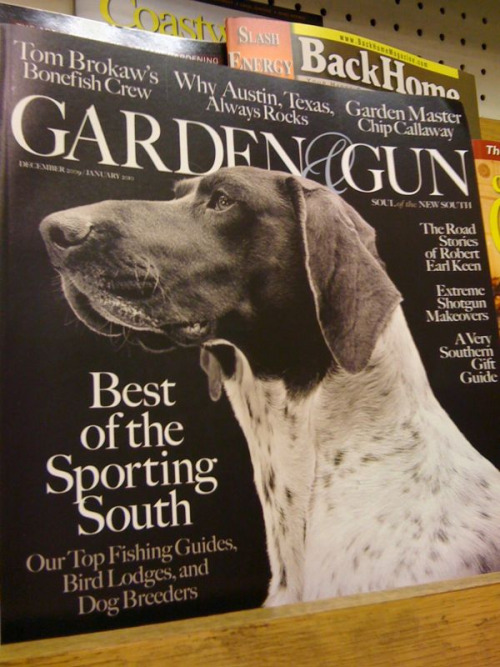
categories, or, "soul of the new south"


Cross-posted from my Tumblr image blog Village Dog (such as it is - and where you can see the subtitle of the magazine more clearly).  Also see this earlier post on dogs and guns and other accoutrements of Southern history.

Thursday, September 3, 2009

ghost dog


Sniff from karolina sobecka on Vimeo.

Sobecka calls Sniff an "interactive public projection."  In her artist's statement, she asks the viewer/reader to imagine an urban interspecies encounter:

As you walk down the street you are approached by a dog. He cautiously and curiously sniffs you as he gets closer. He is on his guard trying to discern your intentions. He will follow you as you walk on and interpret your gestures as friendly or aggressive. He will try to engage you and get you to pay attention to him... As the viewer walks by the projection, her movements are tracked by a custom computer vision system. A CG dog comes up in the projection and sniffs her, following her as she moves in front of the display.

What's being narrated here is a multisensory meet-and-greet between two free-roaming agents - something which is happening less and less, I think, in our leash-lawed, obedience-trained streetscapes. Indeed, as the piece is actually staged, Sniff is not loose on the sidewalk but trapped behind a window. Despite his name, he can follow you but never actually sniff you. The "interaction" here ends up being decidedly one-sided: with Sniff always pacing, jumping, reacting, beseeching.

When I posted this on facebook my friend Paul commented: "shelter dog behavior." In his perceptive reading, Sniff is a projection not so much of dog-human social reciprocity as its opposite.

Sunday, August 30, 2009

dogs of mississippi, 2009

* Also see dogs of mississippi, 1947

From "A World Away, Close to Family," a New York Times piece on African American city kids who spend their summers with relatives in the South (story by Robbie Brown, photos by James Patterson):

The sight of a menacing dog outside her Brooklyn apartment would send Amya CaJoie Stewart skittering inside for safety. But not the Rottweiler that prowled the gravel road at her aunt’s house in this sun-cooked rural town. In a flash of bravado, the prim 10-year-old lured the dog with a dish of water, lashed it to a post and named it Sam.

“That’s what you do in Mississippi,” Amya explained. “You tie the dogs in your yard.”

* * *

The matriarch of the family, Estella Mae Oaties, 81, supervises Amya during the day. Behind her house, she keeps several dogs as pets, and it is Amya's job to feed and water them. When she grows up, Amya says, she might want to become a veterinarian.

dogs of mississippi, 1947

* Also see dogs of mississippi, 2009

William Faulkner and his fyces (photo by Henri Cartier-Bresson, courtesy of Iconic Photos)

Tuesday, June 16, 2009

eyes that have looked at jim crow

In the timeless traditions of the internet, I stumbled upon a wonderful digital collection of early 20th-century African American photography at the august institution where I work (see credits below - also see this related post on historical photos of Chinese dogs). The website doesn't provide too much information about the photographer, Michael Francis Blake - only that he opened the first one of the first black photo studios in Charleston, South Carolina. Which, of course, is saying quite bit. {Corrected & updated: 1:12am, June 17, 2009}

I was delighted to see that two of the ~170 photos in the collection feature dogs. I love the shadow of the photographer (?) in this one:

The vast majority of the images of the collection are posed portraits, studio or outdoors. Without exception, Blake's clients were impeccably dressed for the occasion. This is a beautiful image that makes me almost want to cry: the elegance of the women, the sweet openness of the boy's face, the alertness of the little dog.

In these images, to paraphrase Roland Barthes, we are looking at eyes that have looked at Jim Crow. Or, in the case of the unidentified woman below, stared back and perhap even glared at it at choice moments. This is my favorite dogless photo in the lot. I just love the tilting of the chair, the insousiance of the gesture.

Image credits (from top): "snapshot, dog lying down, unidentified," "Seated elderly woman holding a small dog, standing child and two standing women, unidentified," "Standing woman outdoors, unidentified" from Michael Francis Blake Photographs, Rare Book, Manuscript, and Special Collections Library, Duke University.

Friday, May 8, 2009

dog cartography

My love of dogs and love of maps converged in a Dog Whisperer episode I caught this afternoon (apologies for the iPhone/TiVo freeze frame photography):

Cesar's client in this episode is dog-phobic dad Ernesto - a hulking Mr. Clean look-alike - who desperately wants to overcome his traumatic memories of a childhood dog attack, so that his kids can get a family pooch. In the middle of the episode, Cesar breaks out this dog energy map, wherein his "team" has detailed the location and energy level (High, Medium, Low) of every dog in Ernesto's neighborhood. So if he's not feeling sufficiently "assertive" one day, he can simply chart a course avoiding the high-strung big dogs, etc.

Millan's dominance-based method of dog-training has been criticized, rightfully so, by progressive trainers and behavioral scientists. This 2006 article in the San Francisco Chronicle lays out the arguments nicely. But behind or alongside the whole macho "leadership" claptrap, there also seems to be something incongruously - or may be charlatanically? - new age about his approach. I mean, energy map? (I also suspect there's more interspecies subtlety and give-and-take in his actual techniques than he lets on - but that's an admittedly unscientific observation.)

In any case, this amusing detail of Millan's map pretty much describes the energy-scape of my household:

find of the day

Funny-looking (and inaccurate) illustration for a talking (not reading) dog story in the Nov/Dec 1831 issue of Juvenile Miscellany, a children's lit magazine edited by the trail-blazing feminist abolitionist writer Lydia Maria Child.

Saturday, April 11, 2009

more on dogs and the post

Re: post below: how did I manage to forget about the legendary dogs-and-cats like antagonism between canines and mailmen? That puts a whole new spin on things!

Saturday, April 4, 2009

dog as social media?

My stamp-collecting father wanted to visit the National Postal Museum while we were in DC last weekend, so we went! (By the way I would recommend the place for kids - and for kidlike adults.) For some strange reason, though I often feel like my life depends on e-mail, facebook, and now (maybe) twitter, I haven't thought much about - or have simply forgotten - the social and affective dimensions of good old regular mail.

Affect and sociality are very much front and center at the museum. The poem engraved above the entrance makes it pretty unmistakable:
Messenger of Sympathy and Love
Servant of Parted Friends
Consoler of the Lonely
Bond of the Scattered Family
Enlarger of the Common Life


* Evidently this is only half the poem - the rest is here
So, the mail is like... dogs? Indeed dogs are everywhere in the museum: from the various incarnations of Owney the official USPS mascot (in bronze, in kid's books, as stuffed animal, and just plain stuffed!) to canine figurines in a cute postal diorama. I don't have anything smart or interesting to say about this curious conjuncture of mail and dogs, but will keep thinking about it. In the meantime, some images that caught my eye:


Thursday, March 26, 2009

poodle ESP

An irresistible photo: from the archives of Duke Parapsychology Laboratory, now Rhine Research Center, subject of an interesting-sounding recent book.